Anti-Ram Storefront Security in Ontario: Shutters, Glazing, and Bollards
Coordinated Storefront Defence Against Vehicle Impact
Storefront security in Ontario is no longer just about locking the door at night. Vehicle-into-building incidents, organized retail crime, and high-value inventory have pushed many owners to think about how a car or truck could reach their glass in the first place. That means planning the entire frontage as one system, not a set of separate parts.
A resilient storefront usually depends on three physical elements working together:
Exterior commercial security shutters or roll-up doors
Impact-resistant glazing and framing
Engineered barriers such as bollards, curbs, or reinforced planters
At Sunrise Rollups and Shades, we manufacture and install exterior aluminum roll shutters and roll-up doors. We do not supply interior window coverings or décor products. For true anti-ram performance, our systems must be coordinated with glazing contractors and civil or structural engineers so the shutters, glass, and barriers share loads instead of failing one at a time.
Understanding Anti-Ram Risk for Ontario Storefronts
Anti-ram risk starts with thinking through how someone might try to drive a vehicle into your frontage. Typical scenarios include:
A single hard impact into the main glazed area to break glass and grab stock
Repeated ramming to pull framing apart or buckle doors
Targeted entry through rear loading bays, service corridors, or side doors
Your site layout has a big effect on this risk. Factors we often see in Ontario include:
Roadway alignment that points traffic directly at a unit
Parking that allows a straight run at the glass with little to stop a vehicle
Low or damaged curbs that do not meaningfully slow a vehicle
night-time traffic patterns that make it easy to arrive and leave quickly
Local climate adds more layers. Snow and ice can reduce traction so a vehicle might slide off its intended path toward a storefront or pedestrian area. Freeze-thaw cycles can shift pavements and shallow foundations, which affects bollard plumbness and barrier performance over time. Many municipalities also expect property managers to protect public walkways along the building line, not just the door itself.
Performance Roles of Shutters, Glazing, and Barriers
Each part of the frontage has a different job. If one piece is missing or under-designed, the system as a whole is weaker.
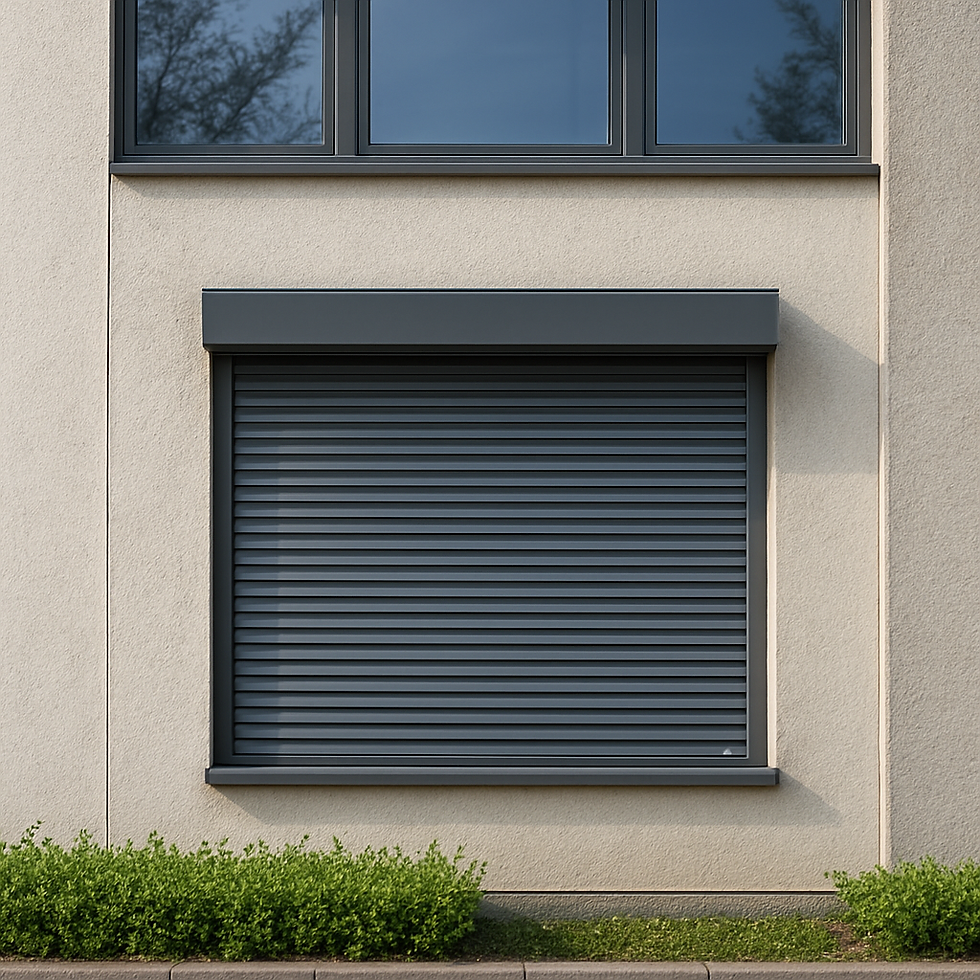
Exterior commercial security shutters in Ontario act as the first mechanical layer over openings. Properly designed and installed, they:
Limit fast physical access after glass is broken
Help contain debris and loose framing
Slow forced entry tools so response time improves
These are exterior aluminum systems, not interior blinds or decorative shades. They are mounted to the building structure and are expected to take real loads.
Glazing and framing systems carry the next share of the work. Impact-resistant glass and stronger frames can:
Take the first contact from a vehicle or thrown object
Keep fragments contained, reducing hazards inside the store
Stay anchored to mullions and structure when loaded from both impact and the reaction of a shutter pressing on them
In front of all this, fixed or removable bollards, guardrails, or reinforced planters are designed to absorb and redirect vehicle energy before it reaches the shutter and glazing plane. Engineers may reference impact and loading criteria for vehicle restraint when sizing these elements, including:
Vehicle weight and typical approach speed
Expected impact angle
Foundation depth, width, and reinforcing steel
When barriers stop or slow the vehicle early, they reduce the demand placed on shutters, glass, and frames.
Engineering Exterior Aluminum Shutters for Impact Loads
For anti-ram scenarios, the design of the shutter itself matters. At Sunrise Rollups and Shades, our exterior aluminum roll shutters and roll-up doors are sized and assembled for Ontario conditions, which means we look closely at:
Slat profiles and wall thickness for bending strength
Guide channel design so slats stay engaged under load
Bottom bar reinforcement and locking hardware to tie the curtain into the guides
Structural attachment is just as important as curtain strength. We focus on:
Continuous angles or plates that spread loads across the wall
Through-bolting into masonry or steel where practical
Anchor spacing patterns that match calculated loads
Confirming that lintels, beams, and jambs can accept the transfer of impact and wind forces
Operational reliability under frequent cycling and wide temperature swings is another key factor. Motors must be sized for the weight and duty cycle of the curtain. Manual override is usually required for power outages, especially where the shutter covers an egress route or emergency access door. Enclosures and hoods must handle rain, snow, and wind-driven debris without clogging, freezing, or binding.
Coordinating Barriers, Glazing, and Storefront Systems
Anti-ram storefronts fail most often where trades do not coordinate. Bollards poured in the wrong place or frames sized without space for shutter guides can leave gaps that are hard to fix later.
For bollards and barriers, placement must account for:
Shutter guide positions and roll box locations
Clear egress paths and door swings
Municipal accessibility requirements for walkways
Snow plow routes and common winter maintenance practices
Barrier spacing and setback from the glazing line should line up with the width of the protected opening and the shutter guide centres. Poorly spaced bollards can leave impact gaps where a smaller vehicle can slip between or where energy is driven into an unprotected corner of the frame.
On the glazing side, the chosen shutter layout has to match the storefront framing system. That means checking:
Headroom to fit roll boxes behind fascias or bulkheads
Guide tolerances relative to mullion locations
Connection details for curtain wall or stick-built frames
Impact-rated or laminated glazing needs adequate edge cover and bite in the frame, and mullions must be anchored strongly enough that reaction loads from an engaged shutter do not twist or pull them off the structure. Shop drawings from all trades should be reviewed side by side so shutter brackets, mullions, transoms, and any service penetrations do not create a weak joint, especially at corners and bulkheads.
Ontario building code requirements also come into play. Wind loads, snow drifting at canopies and parapets, and rules for emergency egress or firefighter access all affect how exterior shutters can be applied. Local environmental loads add more design checks: wind-driven debris during fall storms, ice accretion on shutters and guides, and corrosion from road salt near grade all influence material and hardware selection. While vehicle impact loads are often set by standards outside the building code, designers should align their assumed impact, wind, and operational forces so no single component is under-designed.
Manufacturing Quality and Planned Anti-Ram Packages
Manufacturing and installation quality control turn a design on paper into a system that performs. With in-house fabrication of exterior aluminum roll shutters and roll-up doors, we can keep consistent slat forming, accurate cutting, and controlled assembly. This helps with:
Dimensional accuracy so guides, hoods, and curtains work together
Predictable deflection under load
Traceability of components for future repairs or upgrades
On-site, proper installation includes detailed field measurement, assessment of the substrate, correct shimming and anchoring, and compatible sealants at interfaces. Commissioning tests should confirm smooth, full travel with no binding, scraping, or misalignment, because operational problems often show up first where the structure is weakest.
Long-term serviceability matters just as much as initial strength. Access for inspection and repair, planned maintenance intervals, and record-keeping on adjustments or part replacements all affect performance. Poor installation or lack of maintenance can reduce anti-ram capacity and daily function at the same time.
When facility managers, property owners, or security consultants plan an anti-ram package, a stepwise approach works well:
Review site risk based on layout, traffic, and tenant mix
Select exterior commercial security shutters in Ontario sized for opening width, height, and expected loads
Lay out preliminary bollard or barrier positions relative to those shutters
Coordinate glazing and frame upgrades to carry combined impact and shutter loads
Early coordination between shutter specialists, structural and civil engineers, and glazing contractors helps align loads, clearances, and attachment details before tender or construction. That is where Sunrise Rollups and Shades focuses our work, as a manufacturer and installer of exterior aluminum systems that are engineered for security, storm protection, energy control, and long-term performance, clearly distinct from any interior window covering or décor product.
Get Started With Your Project Today
Protect your property with tailored solutions from Sunrise Rollups and Shades designed for Ontario’s unique climate and security needs. Explore our commercial security shutters in Ontario to find the right fit for your business, whether you manage a storefront, warehouse, or office building. We will walk you through options, provide a detailed quote, and coordinate a smooth installation timeline. If you are ready to discuss your project, contact us and we will respond promptly.


Comments