Roll Shutters, Roller Shutters, Rolladen: What They Are and How They Compare
Where I grew up in Germany, every house had them. You did not call them anything in particular. They were just part of the house. You lowered them at night and raised them in the morning, the same way you would lock a door. The German word is Rolladen. In the Netherlands they say rolluik. Across most of Europe, roll shutters on windows and doors are completely normal. Nobody thinks of them as a specialty product.
When I moved to Canada with my wife Breanne and eventually took over the business that became Sunrise Rollups and Shades, I quickly realised that most people here had never seen one. Not because the product was bad or complicated. Just because it had never caught on here the way it had in Europe. And one reason it had not caught on was that people had no consistent name for it.
So here is a straight answer to that.
They go by a lot of names
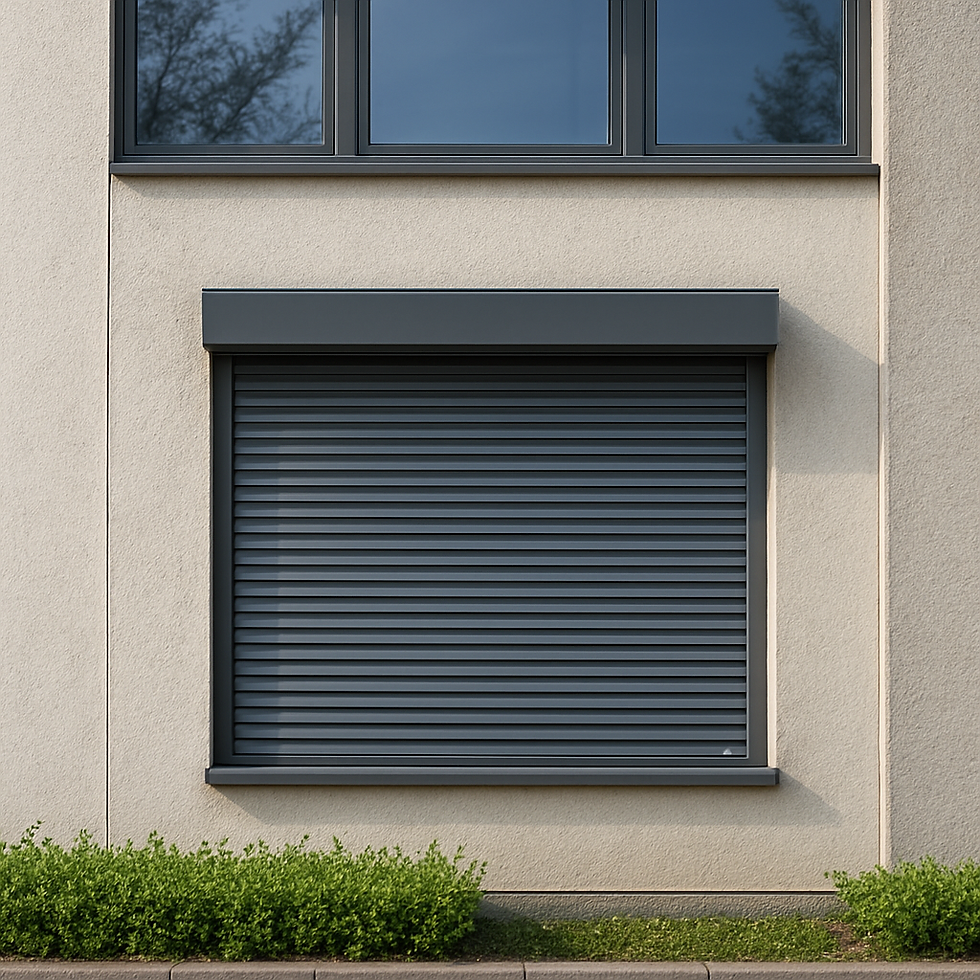
Roll shutter, roller shutter, rolling shutter, roll-up shutter, rolladen, rolluik, coiling door, security shutter. These all describe the same product. It is an exterior shutter made of aluminium slats that rolls up into a box mounted above the opening. The box sits above your window or door. The slats run inside two guide rails, one on each side. An operator moves the curtain up and down. That operator can be a manual crank, a spring, or an electric motor.
If you search "rolling shutter" online, most of what comes back will be photography content. Rolling shutter is also the name of a distortion effect in video cameras. Stick with "roll shutter" or "roller shutter" when you are looking for the product.
What a roll shutter actually does
When it is closed, a roll shutter puts a solid aluminium barrier over your opening. That is the core of it. Everything else follows from that.
Security. A locked window is still glass. A closed aluminium curtain in front of it is a different problem entirely for anyone who wants to get inside. It is not undefeatable, but it changes the situation considerably.
Energy. The slats slow heat from moving through the opening in either direction. That means warmer rooms in winter and cooler rooms in summer without asking more of your heating or cooling system. This is the main reason roll shutters became standard on European homes. The climate argument is at least as strong in Canada.
Noise. A closed shutter takes a real amount of sound out of a room. People living near a highway, a rail line, or an airport notice this fast.
Light. When a roll shutter is fully closed, the room gets dark. Not dim. Dark. Interior blinds can reduce light but they cannot match what an exterior barrier does. This matters for shift workers, young kids, home theatres, and anyone who needs proper blackout.
Weather and off-season closure. Cottages, covered patios, storefronts, any opening that goes unused for part of the year. A roll shutter keeps weather and anything else out when the space is closed up.
How they compare to the alternatives
Roll shutters are rarely the first thing someone finds when they start looking for window protection. Here is how the common alternatives actually stack up.
Burglar bars. Fixed bars on the outside of a window will stop forced entry, but they are permanent. You cannot open them. Most people dislike the way they look, and in a room with no other way out, they are a fire hazard. A roll shutter goes up completely out of sight when you do not need it.
Window security film. Film on the glass makes it harder to break. It will not stop someone who is serious about getting in, and it does nothing for energy, noise, light, or weather. It solves one small part of the problem.
Interior blinds and shutters. These are inside the building. They do not stop anyone from getting through the window. They do not reduce heat transfer the way something on the exterior does. An interior blind is about comfort and privacy, not protection.
Wire mesh and security screens. You see these on some commercial openings. They let air and light through when closed, which can be useful in warm climates. They do not insulate well, and they provide limited weather protection compared to a closed shutter.
Accordion and folding security doors. Common on retail storefronts. They do the job, but they are bulky and visible when open and noisy when you use them. A roll shutter folds away into the box above the opening and is quiet.
Plywood. A lot of cottage owners board up their windows for the off-season. It works, but putting it up and taking it down every year takes time, it does not look like a finished solution, and it is not going to last indefinitely.
Why they are still uncommon in Canada
Roll shutters never got the same attention in North America that they got in Europe. The product has been available here for a long time. The business Sunrise grew from started in London, Ontario in 1982. But it never became the standard option the way it is overseas. Most people who end up with roll shutters found out about them from a neighbour or a friend, not from walking into a building supply store.
That is starting to shift. People who moved here from Germany, the Netherlands, Austria, or other parts of Europe often call us specifically because they already know what they want. Builders and architects with international experience are specifying them more often. And as energy and security become bigger concerns for more homeowners and businesses, more people are finding the product for the first time.
If you already know what you are looking for, the products page is a good place to start. If you are still working out whether roll shutters make sense for your opening, send us a photo and a short description and we will take it from there. That is how every project starts.


Comments