Mitigating Smash‑and‑Grab Risks with Storefront Security Shutters
Updated: May 5
Smash-and-grab crime affects small and mid-sized businesses with direct damage to glazing, loss of stock, increased insurance pressure, and operational downtime. The most effective way to reduce those losses is to strengthen the exterior envelope before an offender reaches the glass.
This article explains how exterior aluminum security shutters for storefronts change the risk profile of a property, how these incidents occur, and which design, manufacturing, and installation factors matter in long-term performance. The objective is to convert an exposed glazed opening into a hardened commercial entry that is not practical to attack.
How Smash-and-Grab Offences Occur
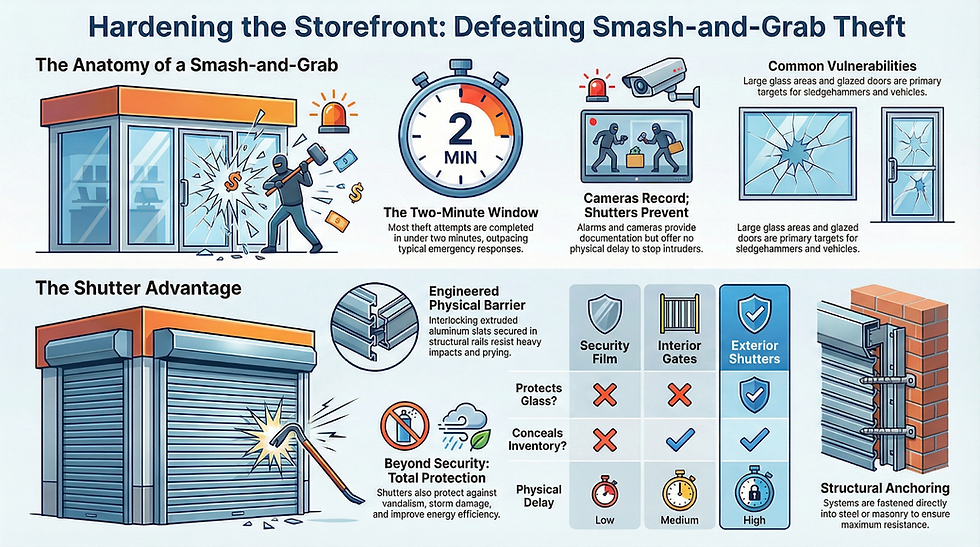
Smash-and-grab offenders work quickly. They do not typically attempt to defeat complex locking hardware; they focus on creating a large opening in a short period. Common methods include:
Sledgehammers or heavy tools used to break large panes of glass
Pry bars applied to door edges, frames, and weak hardware
Vehicles used as battering rams against glazing or entry doors
Multiple individuals entering at once to remove high-value items
Most attempts are planned to take less than two minutes. Within this limited window, alarms and cameras alone often do not prevent loss. They record the event and generate notifications but do not provide sufficient physical delay.
Typical weak points in commercial storefronts include:
Large, unprotected glass areas without intermediate structural framing
Fully glazed doors with exposed locks and hinges
Side loading doors set back from the street with reduced visibility
Mall-facing openings where interior access is available after hours
Rear service doors with limited lighting or passive surveillance
Laminated glass, alarm contacts, and visible cameras contribute to risk management, but on their own they do not provide a robust physical barrier. Without an exterior protective system in front of the glass, offenders can approach, strike, and leave before any response occurs.
How Exterior Security Shutters Change Risk
A storefront protected only by glazing presents a simple target. One or several impacts can create a usable opening. Even laminated glass can be breached with repeated blows or a vehicle if there is no exterior barrier to maintain the integrity of the opening.
Exterior aluminum roll shutters change these conditions. When deployed and locked, offenders face:
A solid, visible exterior barrier that blocks access and conceals inventory
The requirement for heavier tools, more time, and more noise
An increased likelihood of interruption or identification
Instead of unprotected glass, an offender encounters interlocking aluminum slats secured in structural side rails, with a reinforced bottom bar locked into the building structure. This clearly indicates that the premises uses an engineered exterior security system. That visual and physical deterrent typically shifts offenders toward less protected locations.
Exterior storefront shutters also support insurer and landlord expectations for layered security. Insurers frequently look for a combination of alarms, surveillance, and a substantial exterior physical barrier as part of a commercial risk mitigation plan.
Performance Requirements for Storefront Security Shutters
Not all roll shutters are designed for security and exterior duty. Systems intended for commercial security in Ontario require specific technical attributes and manufacturing quality. Key features include:
Extruded aluminum slats with interlocking profiles for impact resistance
Reinforced end caps to prevent slats from being forced out of the guides
Strong, continuous side rails anchored to structure (steel, concrete, or masonry), not only to cladding
Rigid bottom bars with locking points designed to resist prying and lifting
Anchoring is as important as the curtain itself. For effective security, guides and support angles must be fastened into suitable structural substrates such as steel, concrete, or masonry wherever possible. Head box and guide rail design must match opening size, exposure, and expected loads, including wind pressure on Ontario sites.
Operational choices also affect performance and day-to-day usability:
Manual operation for smaller openings or secondary doors with lower cycling frequency
Motorized operation for larger storefronts or high-cycle commercial applications
Emergency manual override or crank options for use during power outages
Integration with building controls or automation to align with opening and closing schedules
A shutter system only provides protection when it operates reliably every day. That requires correct specification, appropriate power supply for operators, and equipment rated for commercial duty rather than light residential use.
Comparing Exterior Shutters to Other Security Measures
Many property owners initially consider alternatives before exterior aluminum shutters. Each option has a role, but they differ significantly in physical delay and protection of glazing.
Security film and laminated glass:
Help retain glass fragments and can slow entry
Do not stop determined attackers who continue striking
Leave inventory visible after hours
Bars and grilles:
Provide a rigid physical barrier
Can be visually intrusive and challenging to retrofit on some façades
May affect egress and complicate cleaning or glazing replacement
Interior gates:
Provide a secondary barrier inside the glass
Still allow glass breakage, leading to glazing replacement and cleanup
Do not prevent damage from flying debris or exterior vandalism
Simple hardware upgrades on doors:
Improve resistance to prying and lock attacks
Offer limited benefit against glass breakage or ramming
Purpose-built exterior aluminum roll shutters are fundamentally different from interior window coverings or interior shutters. They are engineered as part of the exterior envelope to handle weather, impact, and frequent operation. In Ontario conditions, exterior aluminum systems provide additional performance advantages:
Protection of exposed glazing during wind events and storms
Energy control by reducing solar gain in summer and heat loss in winter when closed
Reduced damage from thrown objects, graffiti attempts, and casual vandalism
These are exterior aluminum security systems designed for durability, impact resistance, and energy performance, not interior décor or light-control applications.
Selecting and Installing the Right Shutter System
Selecting an appropriate system begins with a technical assessment of risk and openings. Key factors include:
Location: street-facing, corner unit, interior mall, or rear access
Risk level: type of goods, visibility of merchandise, and incident history in the area
Opening dimensions: width and height of windows, doors, and loading bays
Traffic and duty cycle: how often each shutter or roll-up door operates daily
These inputs guide the choice of slat profile, head box size, guide design, and drive type. Larger openings or high-cycle use generally require motorized operation with commercial operators, while smaller service doors can be suited to manual or crank-operated units.
Good specification and measuring practices include:
Confirming clear opening dimensions and identifying any obstructions
Verifying available headroom for the roll and enclosure
Evaluating mounting surfaces, including access to steel, concrete, or masonry
Planning the interface with existing doorframes, curtainwalls, and cladding
Installation standards are critical to system performance. Important practices include:
Selecting correct fastener type, length, and spacing for each building material
Using continuous steel angles or tubes behind guides for added structural strength where required
Ensuring precise alignment of guides so the curtain travels smoothly
Setting upper and lower limits accurately to prevent undue load on motors and slats
Safety and code considerations must be addressed. Motorized units should include obstruction detection to protect people and equipment. Emergency access, fire, and life-safety requirements must be reviewed and coordinated with other building systems in accordance with local codes in Ontario.
Commercially rated exterior roll-up doors, aluminum roll shutters, and roll-down screen systems should be installed and serviced by trained technicians. Professional installation and ongoing service by an experienced Ontario-based provider support long-term performance, system reliability, and warranty compliance.
Strengthening Your Storefront Before the Next Incident
Smash-and-grab attempts often increase when store hours extend, foot traffic rises, and high-value goods are visible. Reviewing storefront security before an incident occurs is more effective than reacting after a break-in.
A focused site assessment by an Ontario-based manufacturer and installer of exterior aluminum roll shutters, roll-up doors, and roll-down screen systems can identify where glazing, doors, loading areas, and mall-facing or rear access points are exposed. Based on that assessment, you can determine where exterior aluminum security shutters, commercial roll-up doors, or roll-down screen systems are appropriate and how they should be configured.
By treating exterior aluminum shutters and doors as part of the building envelope and insisting on engineered products, precise field measurement, and professional installation to Ontario standards, you convert a vulnerable glass storefront into a hardened commercial opening. This reduces smash-and-grab risk, protects inventory and glazing, and supports durable, long-term operation under Ontario conditions.
Get Started With Your Project Today
If you are ready to protect your storefront with durable, custom-fitted security shutters for storefronts, our team at Sunrise Rollups and Shades is here to help. We will walk you through your options, explain the installation process and recommend solutions that fit your property and budget. Reach out today to discuss your project or request a quote, or contact us to schedule a consultation.


Comments